Run Your First Flow
You have a workspace, an installed robot, and it is connected. Time to run something.
You will not build anything here — you will import a ready-made flow and watch your robot execute it. Building comes next, in the tutorials.
1. Open the Designer and scroll down
Sign in and open the Designer. Everything you need is on the home page — just below the prompt box and your projects.
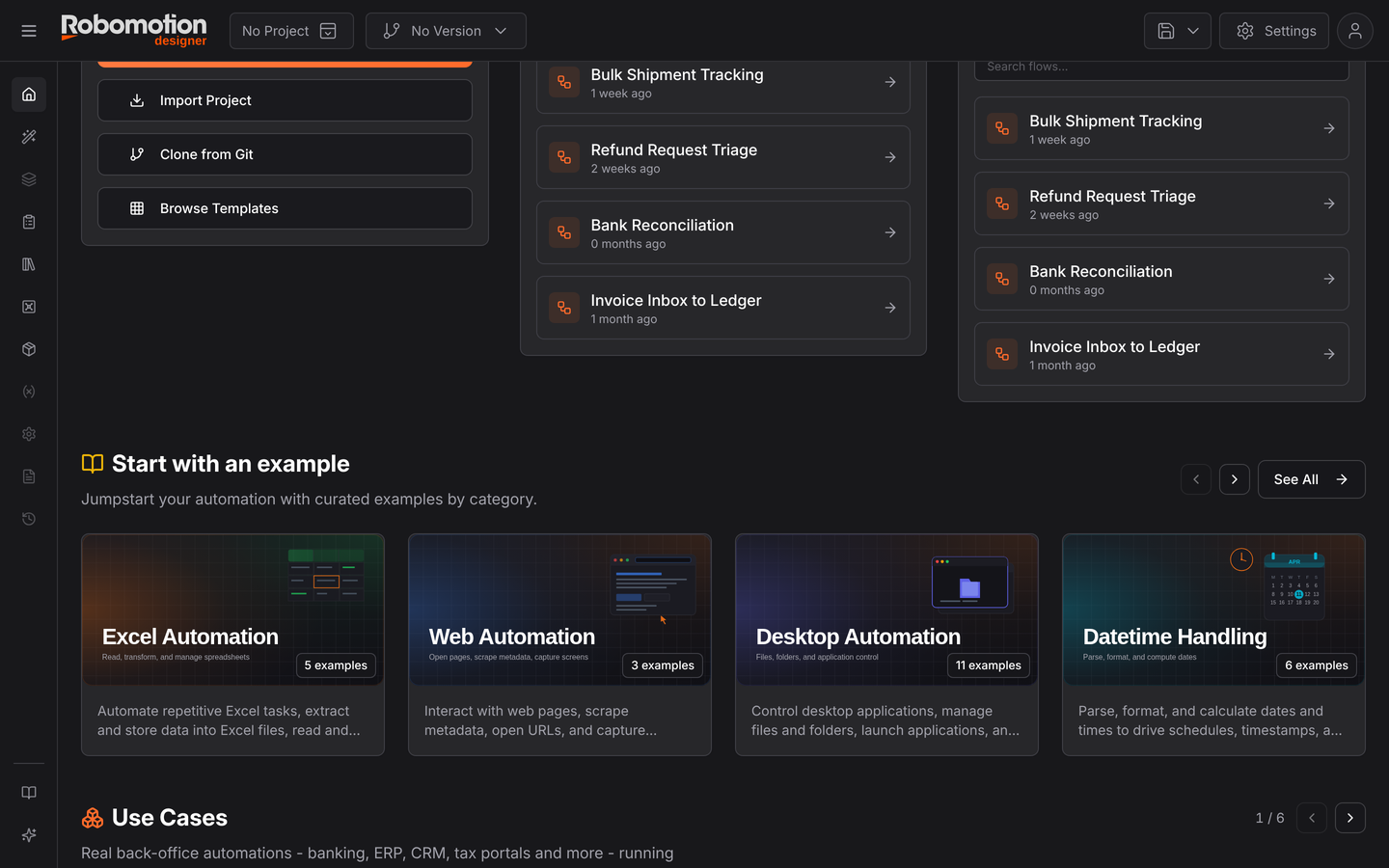
Scroll to Start with an example, which groups examples by category with the number in each:
Keep scrolling and you reach Templates, the individual flows as cards. Each card shows a thumbnail of the actual flow, so you can see its shape before opening it:
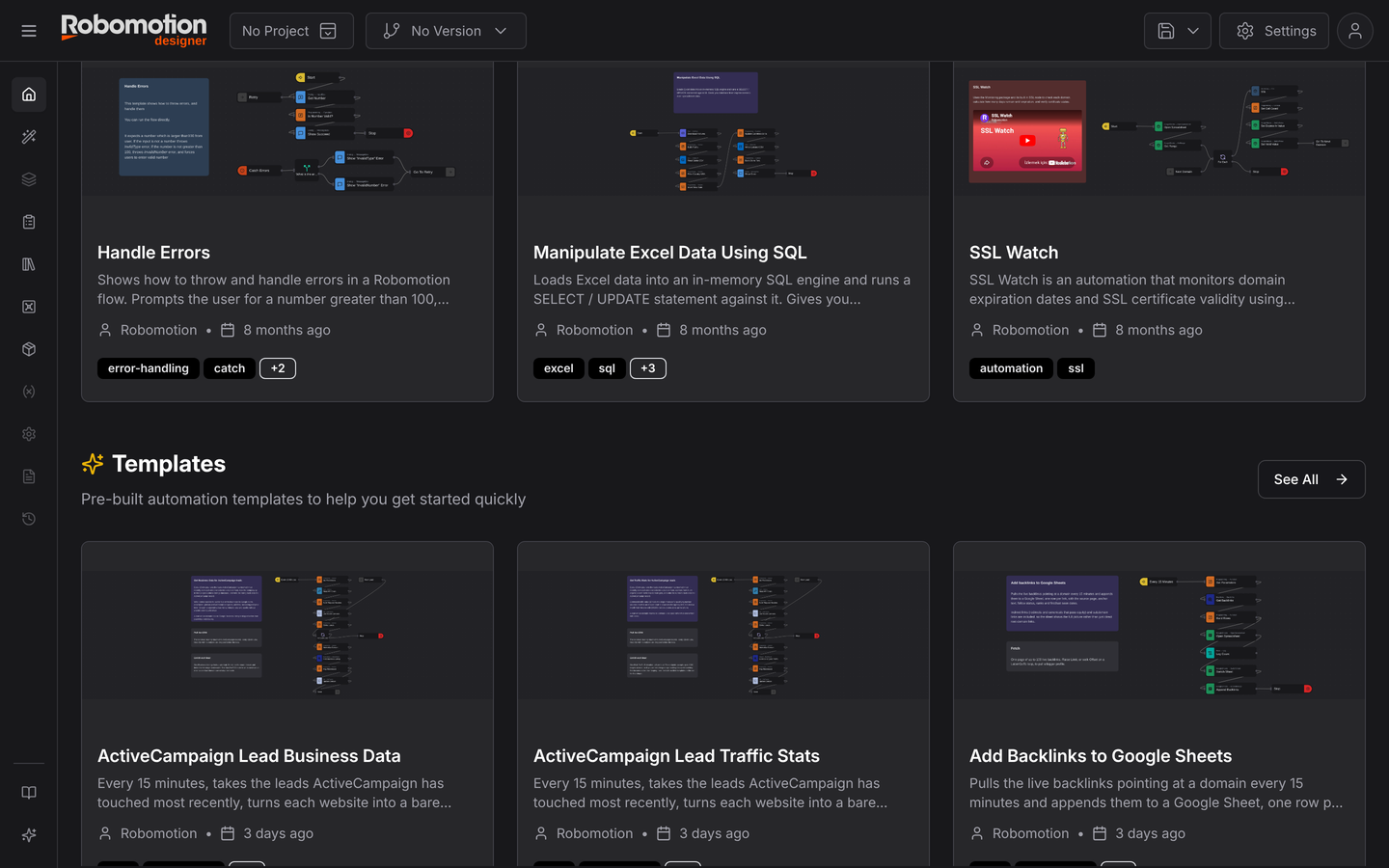
For a first run, choose from Web Automation or Desktop Automation. Those open a browser or an application on your screen, so you can watch the robot working rather than just reading a result. A flow that quietly calls an API is less convincing the first time.
2. Or search the whole library
See All opens the full library — a category sidebar with counts, and a search box:
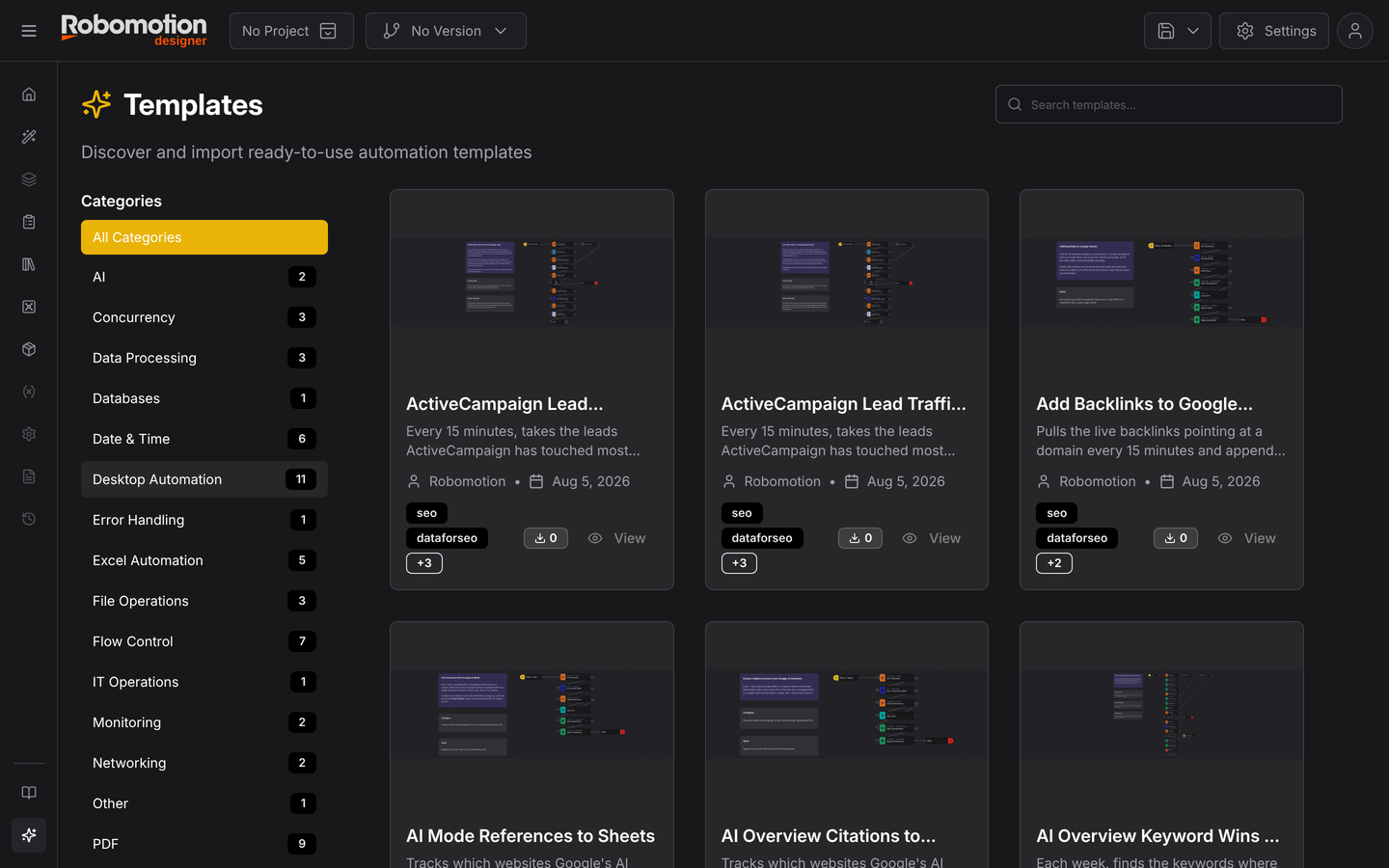
Over 250 flows, searchable by name and filterable by category. This is the place to go when you
know roughly what you want: search excel, or coin, or invoice.
Each card carries the author, the date, its tags and how many times it has been imported.
3. Read the template, then import it
Opening one shows its details:
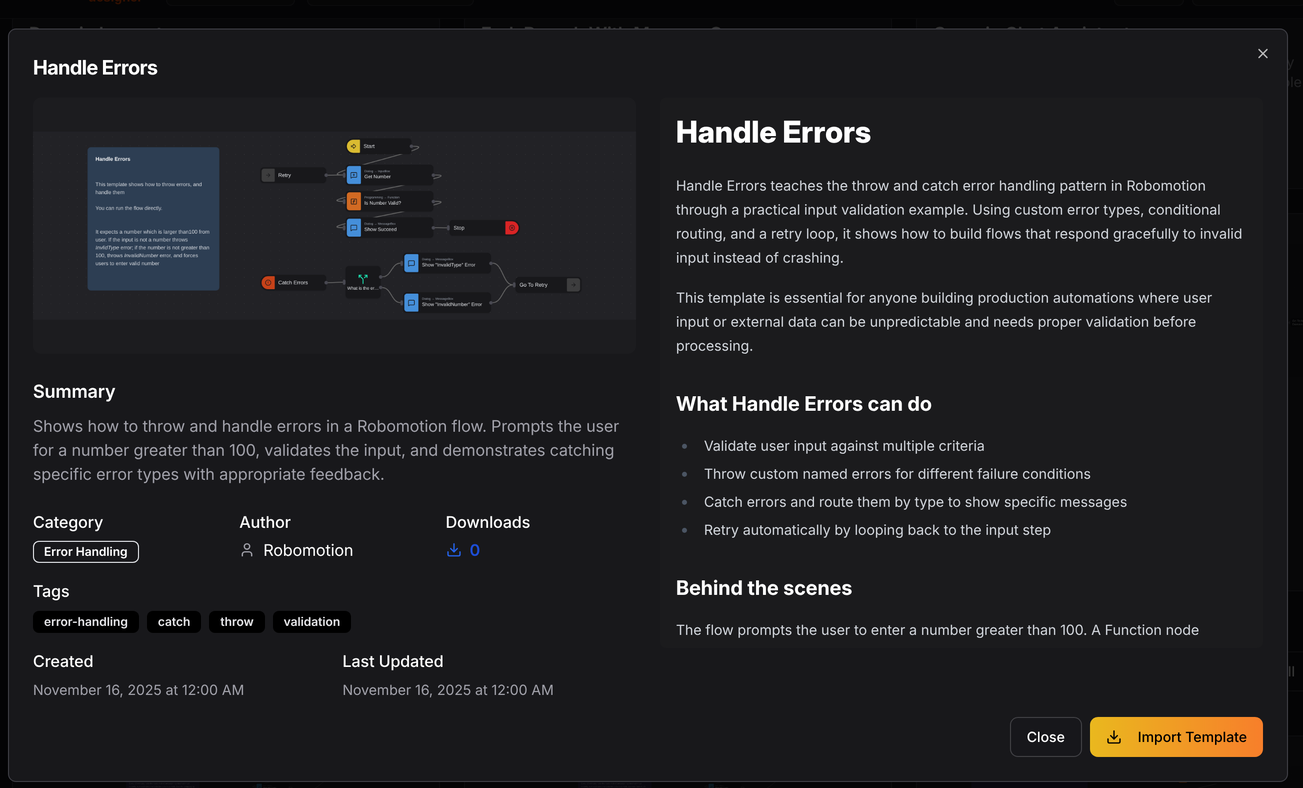
Worth a moment before importing. Each carries a summary, its category and tags, and a Behind the scenes section explaining how the flow works — the difference between running someone else's flow and understanding it.
Press Import Template. The flow opens on the canvas as a project of your own, and you can change anything in it.
4. Run it
Click the play icon in the toolbar, then choose Desktop — meaning run this on a robot of mine, as opposed to Cloud Run.
Pick your robot and press RUN.
No robot is connected. See Connect Robot — the Designer can only offer robots that are online right now.
5. Watch it work
As the robot executes, the Designer colours each node as it reaches it, so you can follow along on the canvas. If the flow opens a browser or an application, that happens on your own screen — the robot is driving your machine.
When it finishes, the run is recorded in Admin Console → Jobs with its status, duration and logs. That is true of every run, scheduled or not.
🎉 That is a robot doing work for you.
When it does not work
| What you see | Usually |
|---|---|
| Desktop is greyed out | No robot connected |
| The flow stops immediately | A missing credential, or a path that exists on your machine but not the robot's |
| Nothing visible happens | The flow had nothing to show. Add a Debug node and check the message — see tutorial 2 |
| It fails partway | Open the job in Jobs; the error and logs are kept |
Next
You have run a flow. Now learn how one works:
Tutorials → — seven short tutorials, in order, each teaching one idea. By the end you will be able to read any template in the library and change it with confidence.