Queues
A queue is a list of work items that robots take from. It is how you split a batch across several robots, and how you keep track of what has been done, what failed, and what is still waiting.
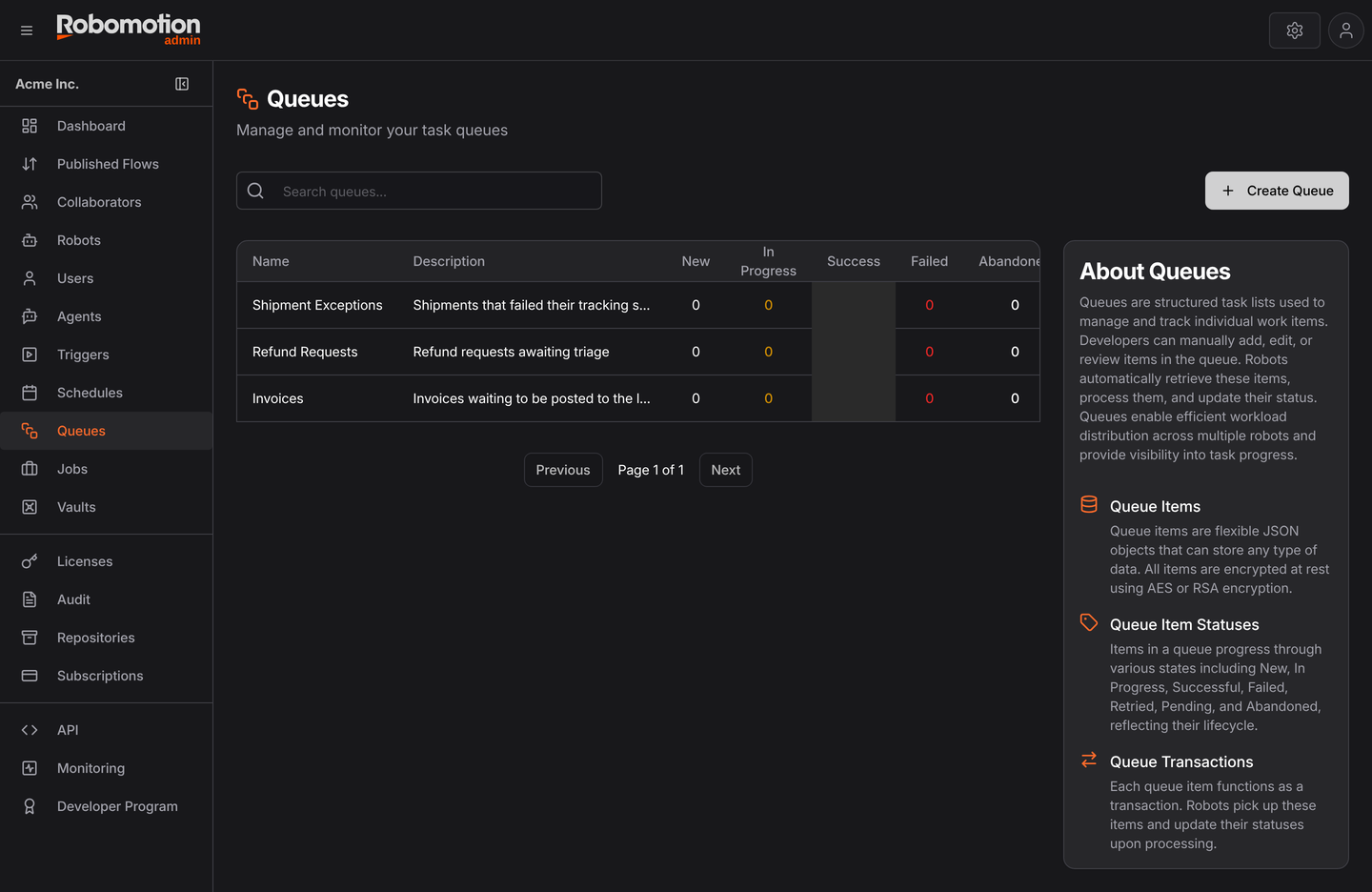
Each queue shows its item counts by state, which is the fastest read on whether a process is healthy: a growing New column means work arriving faster than it is processed, and a growing Failed column means something is broken.
Creating one
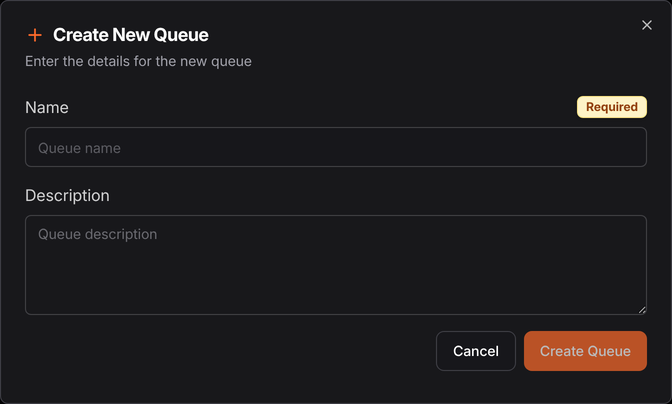
Create Queue, then a name and description:
Item states
An item moves through states as it is worked:
| State | Means |
|---|---|
| New | Inserted, not yet picked up |
| In Progress | A robot has taken it and is working on it |
| Success | Completed |
| Failed | The flow marked it failed |
| Abandoned | Given up on — retried too often, or explicitly abandoned |
New is set for you on insert, and In Progress when a robot takes an item. The final state is set by your flow — the queue does not know whether the work succeeded, so the flow has to say so.
If a flow crashes without setting a final state, the item stays In Progress and nothing else picks it up. Set the state on the error path too, not just the happy path — see Exceptions.
Why a queue rather than a loop
A For Each over a list runs on one robot, start to finish, and loses its place if the robot dies. A queue survives both:
- Several robots can work the same queue at once
- A crash loses one item, not the batch
- Progress is visible while it runs, not only at the end
- Retry is per item, not all-or-nothing
Queues are also how HTTP triggers deliver requests: the request body is encrypted into a queue and the flow reads from there, so callers are never waiting on a robot.
Working with items in a flow
- Add Item — insert work
- Fetch Data — take the next item, or all of them
- Update Item — set the state
- Delete Item — remove one
See also
- Queue Trigger — start a flow when an item arrives
- Queue package — the nodes themselves