Vaults
A vault holds the credentials your flows use — passwords, API keys, database connections — so they are never typed into a node property and never sit in a flow's JSON.
Vault is on the Designer's left rail.
Two locks, not one
This trips people up, so it is worth being explicit. There are two separate secrets:
| Lock | Opened with | Scope |
|---|---|---|
| Vault access | Your account password | The whole Vaults area, per session |
| A vault | That vault's Vault Secret Key | One vault |
Vault access
Opening Vault asks for your account password, even though you are already signed in:
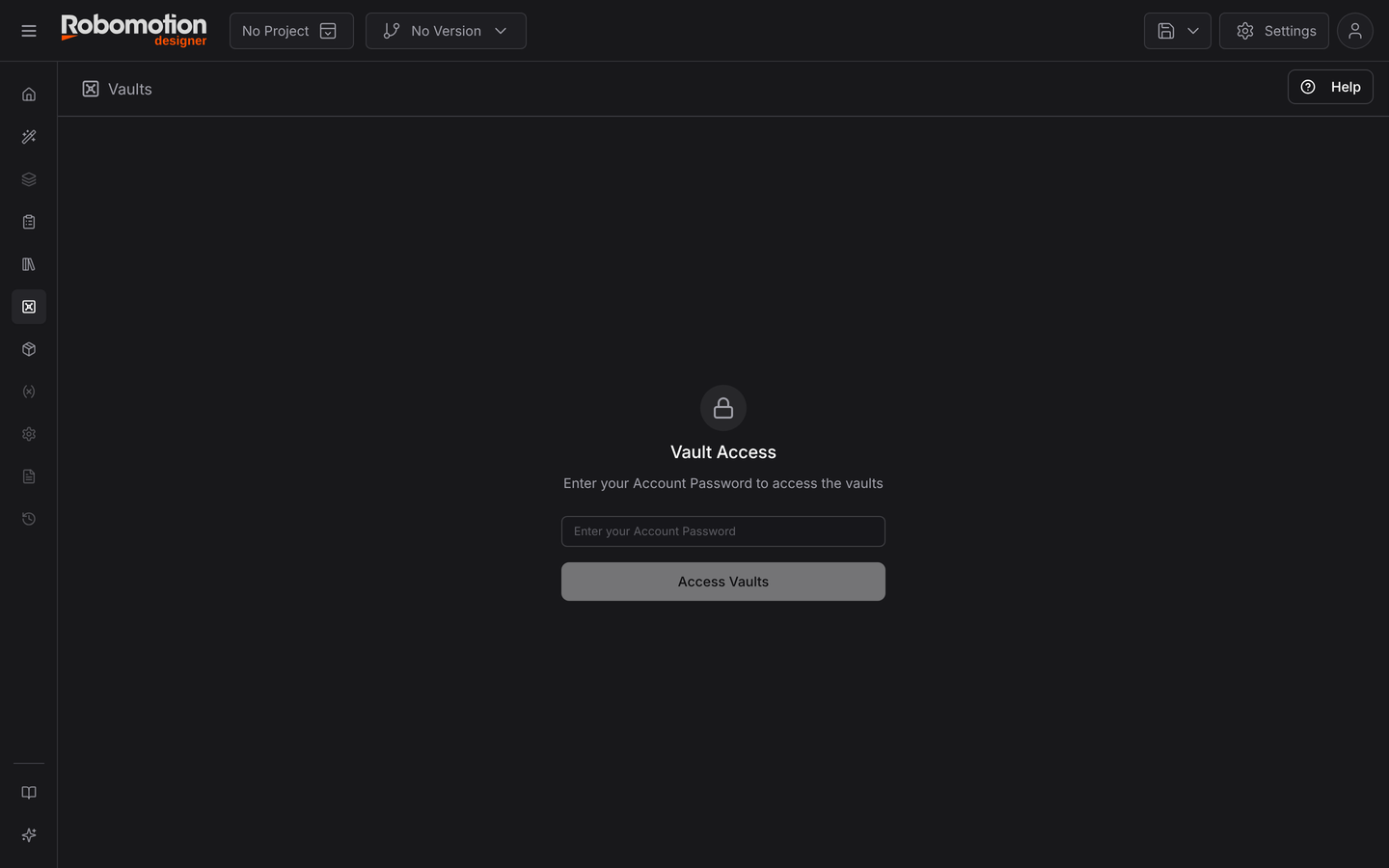
That is deliberate. The password unwraps your key material — a valid session cookie is not enough, so someone who gets hold of a logged-in browser still cannot read your credentials.
The vault list
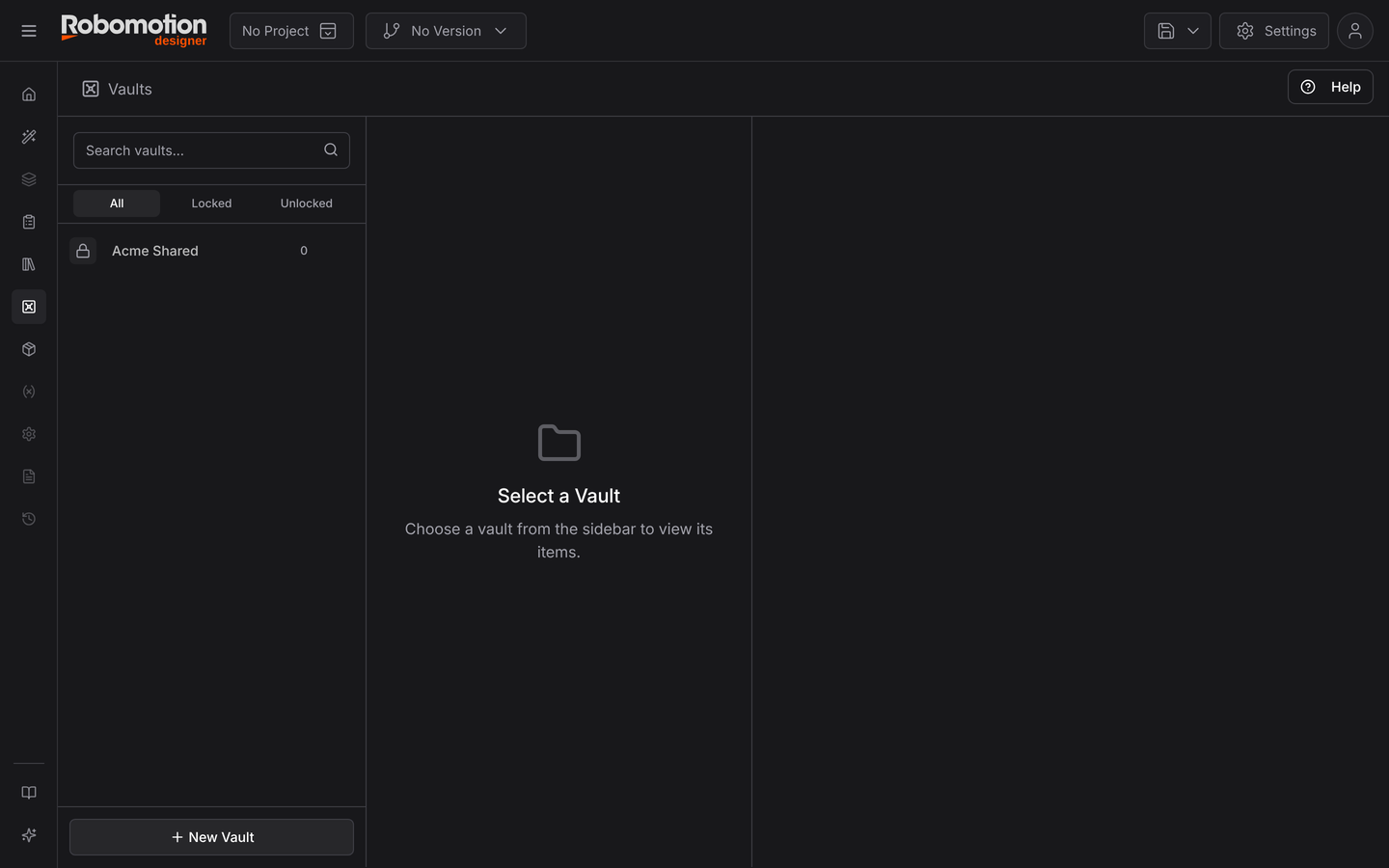
Each vault shows a padlock — locked or unlocked — and its item count. The All / Locked / Unlocked filter matters once you have a few, because an unlocked vault stays unlocked for the session.
Creating a vault
New Vault, then a name and a description:
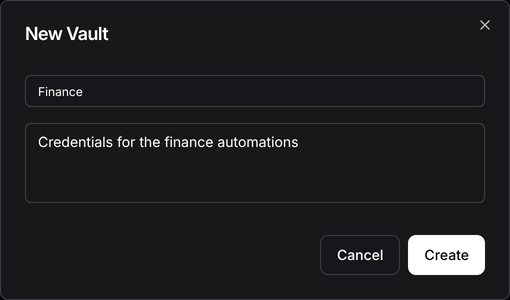
The next dialog is the important one, and it appears exactly once:
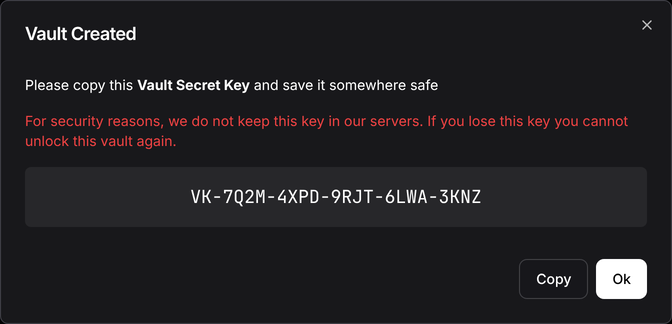
For security reasons, we do not keep this key in our servers. If you lose this key you cannot unlock this vault again.
That is literal. The key is generated in your browser and never sent to Robomotion, so nobody — including Robomotion — can recover it. Copy it into a password manager before closing this dialog. A vault whose key is lost is not recoverable; it can only be deleted and rebuilt.
Creating a vault through the API makes the record without generating any key material, and the result cannot be unlocked by anyone. Create vaults in the Designer.
Inside a vault
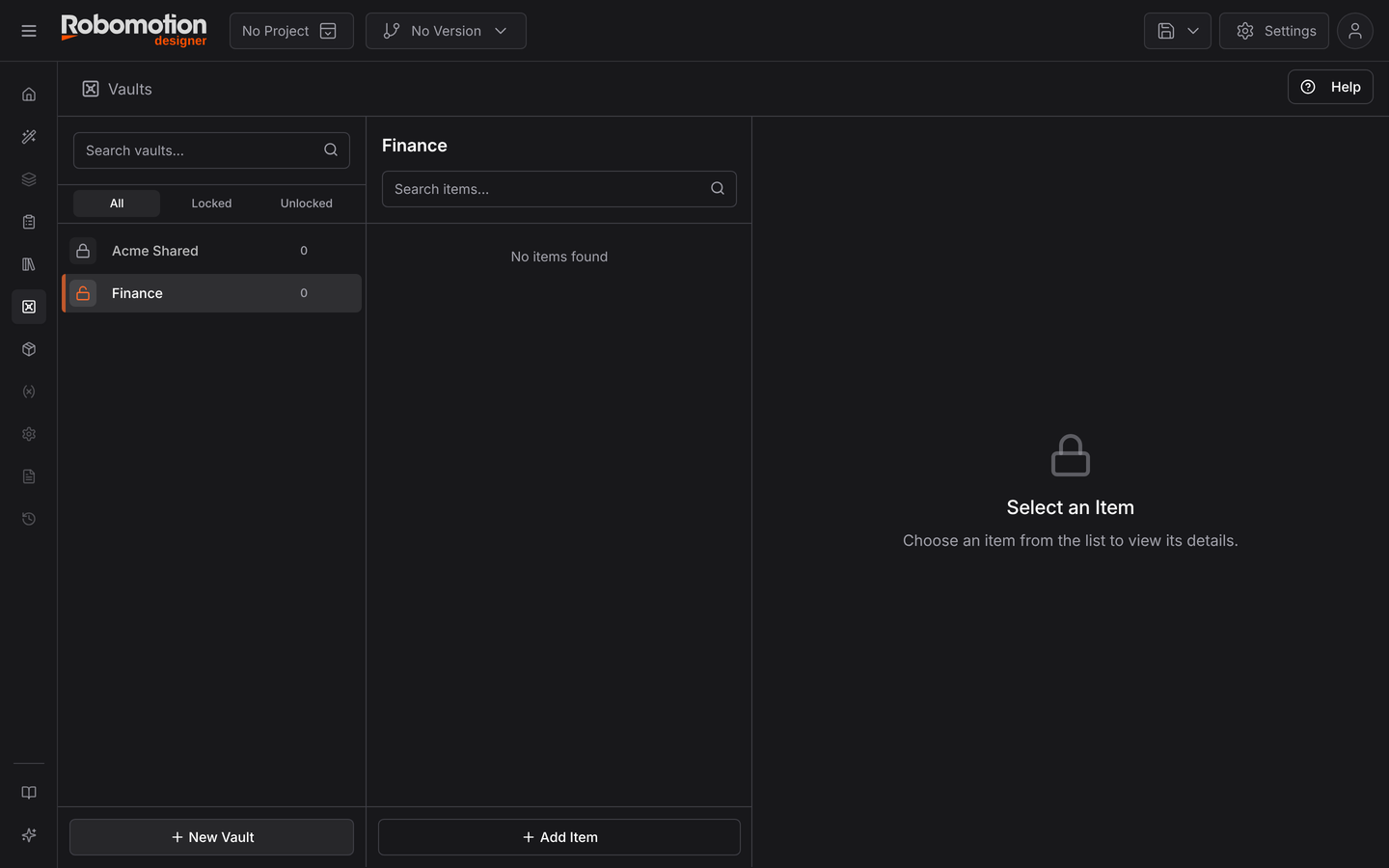
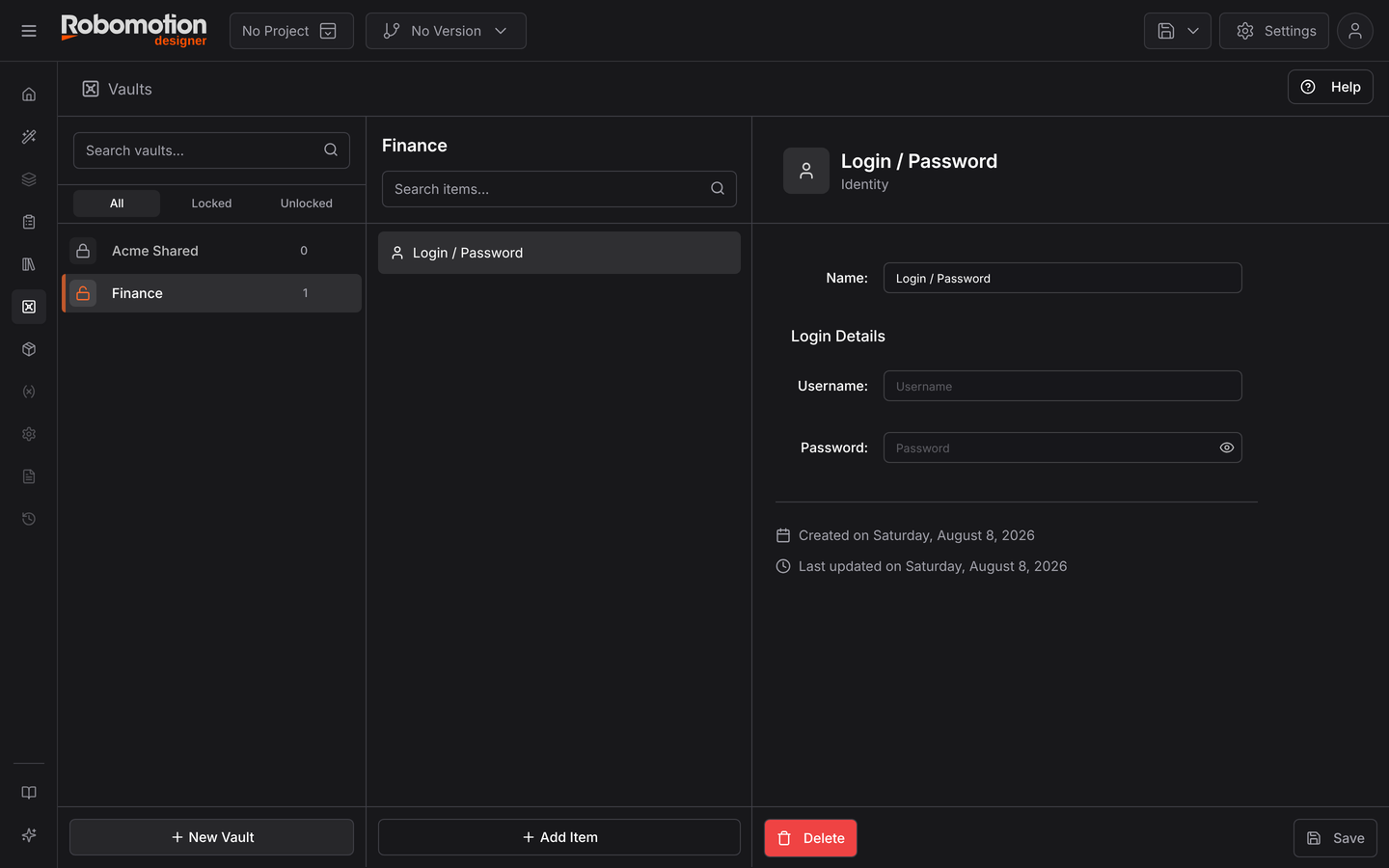
Three columns: vaults on the left, that vault's items in the middle, the selected item's detail on the right.
Item types
Add Item offers eight kinds:
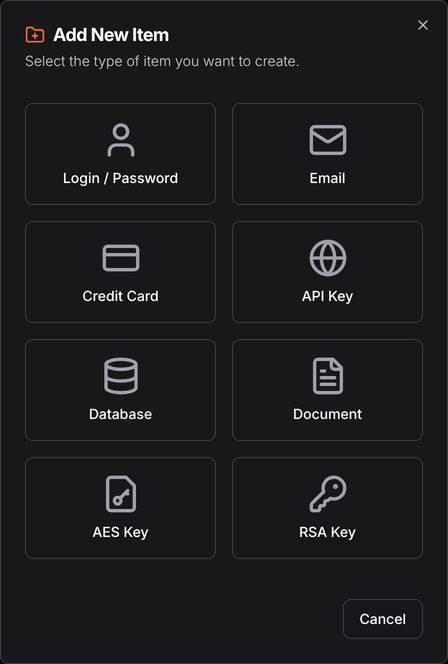
| Type | For |
|---|---|
| Login / Password | A username and password — the common case |
| Mail account credentials, including server settings | |
| Credit Card | Card details |
| API Key | A token or key for a service |
| Database | Host, port, database, user and password as one item |
| Document | A file — a service-account JSON, a certificate |
| AES Key | A symmetric key, for encryption nodes and triggers |
| RSA Key | A key pair |
The type is not cosmetic. It determines the fields the item has, and nodes ask for the type they need — a Google Sheets node wanting a service account will offer you Document items.
Using an item in a flow
Nodes that need a credential take a vault and an item rather than a value, so the secret is fetched by the robot at run time and never stored in the flow. Change the password in the vault, and every flow using it picks up the new one without being edited.
Sharing
A vault can be shared with other people in the workspace, which is how a team uses one set of credentials without passing the secret key around by hand.
See also
- Vaults (Admin Console) — the workspace-wide view
- Security — how the encryption works
- Authentication guides — getting the credentials in the first place